
Why buy French antiques at all?
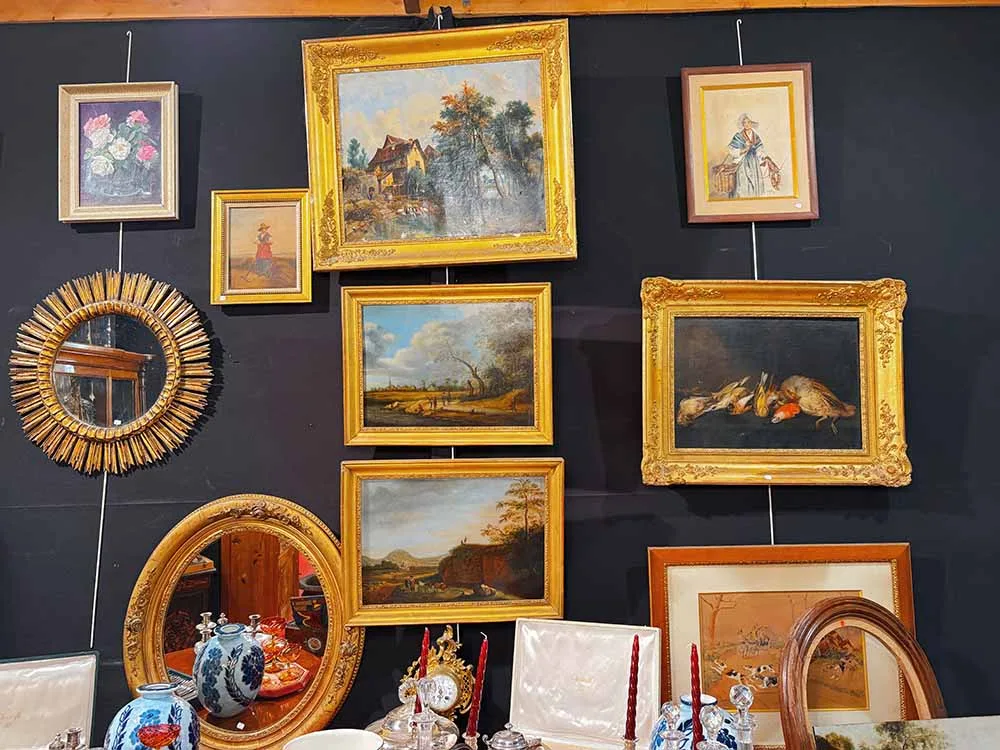
In France, we believe in the culture of objets that were meant to last.
Because France isn’t just “a place with old articles. Here in France : we believe in the culture of objects that were meant to last, furniture built to be repaired, bronzes cast to be admired, linens woven for generations, and ceramics that quietly survived three moves and a divorce.
French antiques also have something collectors love: categories and language. Once you know the vocabulary, the market becomes readable. And when a market is readable, you make fewer expensive mistakes. In this article, we’re going to provide answers on: How to Shop for Antiques ?
1. Where to buy antiques in France (and what each place is good for)
Flea Markets (Brocantes)
Think: flea markets with everything from genuine treasures to… questionable lampshades.
Best for: serendipity (discovery), small decorative objects, frames, glass, vintage posters.
Risk: mixed quality, little documentation, condition surprises.
Antique dealers (antiquaires)
Curated shops with expertise and usually better disclosure.
Best for: furniture, signed pieces, higher-value décor, guidance.
Premium: yes, because you’re paying for selection, knowledge, and often a form of guarantee.
Auction houses (maisons de ventes aux enchères)
Transparent pricing via hammer results, often with detailed condition notes and provenance.
Best for: learning market value fast, buying higher-end works, discovering specialists.
Watch-outs: buyer’s premium, VAT rules, transport.
Design & vintage galleries
- If you love 20th-century: Art Deco, mid-century, modernist French design.
Best for: vetted pieces, strong provenance, “ready to live with” condition.
2. The French words that unlock the antique market (save these)
Époque : period (authentic to the era)
Style : made later “in the style of” (not necessarily antique)
Dans le goût de : “in the taste of” (even looser)
Attribué à : attributed to (not certain)
Entourage de / école de : circle of / school of
Restauration : restoration (good can be fine, heavy can kill value)
Rechampi : repainted highlights (often on gilded objects)
Accident / manques / fêles : damage / missing parts / hairlines (ceramics)
If you learn only one distinction: “Époque” vs “Style.” That’s the difference between historical and inspired-by.

Antique Dealers looking for some treasures in Paris and French Regions…
3. The 7-point checklist before you buy anything
1) Antique Provenance
- Ask: “Where did it come from?”
- Even a simple answer (estate, atelier, family home) is useful. Paperwork is gold, but a coherent story is still valuable.
2) Condition
In antiques, “perfect” is suspicious. You want:
Honest wear (“patina”)
Stable structure (no wobble, no active woodworm)
Repairs disclosed clearly
3) Materials & construction
- Furniture: mass wood vs veneer, hand-cut dovetails, old nails, tool marks.
- Bronze: casting quality, chasing, signatures, foundry marks.
- Ceramics: glaze, weight, sound, hairlines.
4) Authenticity markers
- Signatures, stamps, labels, maker’s marks—great, but not sufficient alone.
(Yes, marks can be faked. No, fakes rarely get the whole object right.)
5) Measurements
- Always. Doorways, staircases, elevator, corners. Romance dies in the hallway.
6) Total cost
- Price + restoration + shipping costs + insurance + import / VAT (if applicable).
- An “affordable” piece can become expensive fast.
7) Your exit strategy
- Ask yourself: could you resell this if you had to?
- Pieces that stay liquid: classic mirrors, well-made commodes, good French lighting, signed ceramics, strong prints.
4. Negotiation in France (the elegant way, be reassured)
At a Brocante (Flea Market) :
-
Small discount is normal (5–15%), larger if the piece is damaged or late in the day.
-
Cash sometimes helps. So does being pleasant and decisive.
At an Antiquaire (Antique Store) :
-
Negotiation exists, but it’s more about respect and justification.
-
Try: “If I take it today, what’s your best price?”
-
Or: “Can you include delivery / a small restoration?”
At Maison de Vente aux Enchères (Action House)
-
No negotiation. Your strategy is: have in mind a budget, set a maximum, include buyer’s premium, and stop emotionally bidding.
5. How to avoid the classic traps
Trap A: “It’s old, so it’s valuable”
- Age isn’t value. Value is quality + condition + rarity + demand + documentation.
Trap B: “It’s in the style of X… therefore it’s X”
- No. “Style Louis XV” could be 1880 or 1980.
Trap C: Over-restoration
- Stripping patina, aggressive cleaning, re-gilding: it can destroy the soul (and the price).
Trap D: The fake “Parisian bargain”
- If the price is absurdly low for what it claims to be, assume there’s a reason.
The Antique Pass approach : How to buy antiques easier
Our goal is to make France’s antique world more approachable:
-
Find reliable antique dealers
-
Understand specialties
-
Compare styles and periods
-
And learn the vocabulary that turns “random browsing” into confident collecting
Because the best French antique isn’t the most expensive one. It’s the one you’ll still love when the room is quiet.
